Posted on Saturday 6 June 2009

Sandra Reilly and her husband John have had nesting Eastern Phoebes for years. Here is a shot of this year’s new crew.
Posted on Saturday 6 June 2009

Sandra Reilly and her husband John have had nesting Eastern Phoebes for years. Here is a shot of this year’s new crew.
Posted on Thursday 4 June 2009

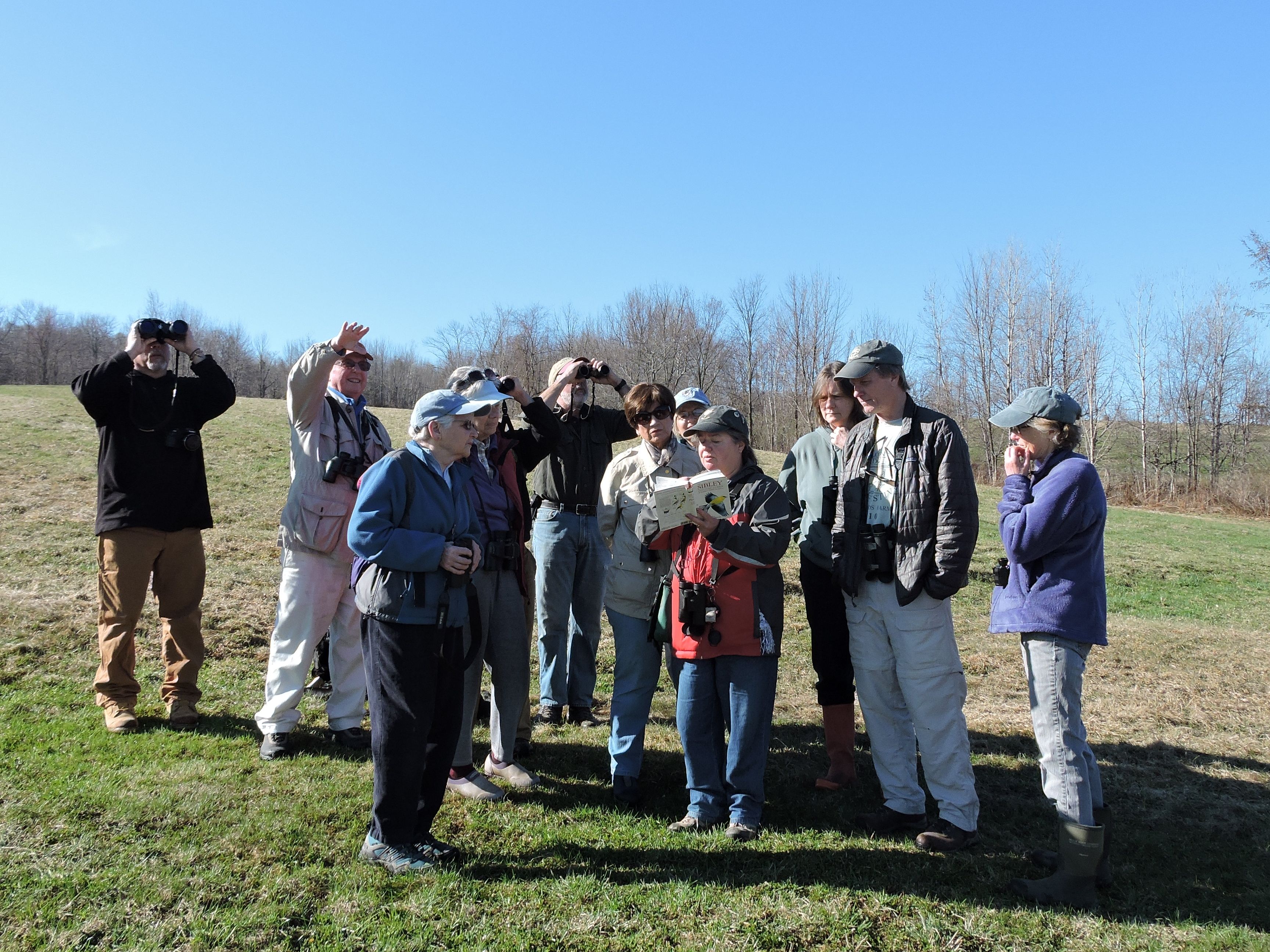
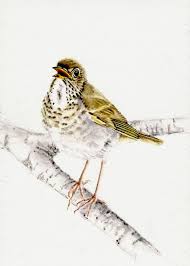
This Common Snipe called many times before it posed on a light fixture above the outdoor skating rink in Waitsfield, perhaps trying to ward off trespassers from trampling a nest of offspring nearby in a wetland meadow. Eight Mad Birders got great looks at it on a weekly Spring Migration Walk on the new section of the Mad River Path, which includes a boardwalk that runs between the Big Picture Theater on Carroll Road and the Skatium. Thirty four species of birds were seen or heard on the walk, including a Swainson’s Thrush! Bill Martin took the photo.
Posted on Wednesday 3 June 2009

James and dawna Foreman noticed this female hummingbird building a nest about thirty feet off the ground in a Sugar Maple tree near the MadBush Condos on Rolston Road in Waitsfield. Note the careful construction and attention to detail as well as the attractive lichen exterior. Pat Folsom got this shot.
Posted on Monday 1 June 2009

…and then there were none. On Wednesday 5/27 the female American Woodcock was still on the nest, but forty eight hours later, she and presumably all four Woodcock chicks were gone, leaving only the nest and some eggshells as evidence of their three week residence on Two Dog Mountain. As predicted, the precocious youngsters, once hatched, were never spotted near the nest. We wish them well and hope to see them again soon…or maybe next year.
Posted on Saturday 23 May 2009

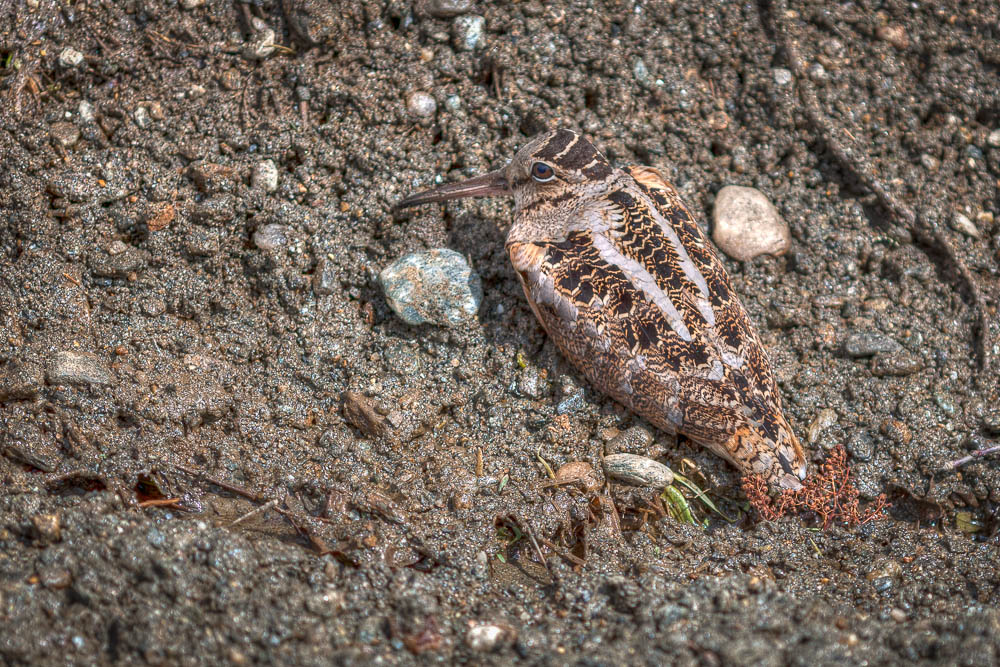
We hope you can find the American Woodcock in this photo. Camouflaged well, she is sitting on a nest, which is just leaf litter on the ground actually, of four eggs, the typical clutch for this species. She was first spotted on May 17th, when she was seen flying low, landing and doing the “broken wing” distraction display. This enabled us to find her nest, which is less than 12 inches from the edge of our lawn, in a heavily wooded area in Fayston. We had heard male Woodcocks “peenting” and doing their “sky dance” nearby since mid April.
Not wanting to disturb the bird to the point where she would abandon her unhatched young, before we approached the nest again, we made inquiry on Vermont Bird and got a reply that led us to David Capen at UVM. David had assisted with a Woodcock breeding study when he was a graduate student. He reported that females are very attached to the nest and that only strong disturbance would be a problem. The bigger issue he noted, was leaving a scent trail which would allow predators to find the nest. He said some field biologists use moth balls to cover their scent, and that rubber boots left less of a scent trail than leather.
The photo above was taken on May 21st, 4 days after we first saw the bird. With an incubation period of 21 days, we figure that no later than about June 7th, and perhaps sooner, the chicks will be hatched. Capen also noted that Woodcock chicks are very precocious, which means that they hatch with feathers, their eyes open and able to locomote on their own. He suspects it will be hard to get a look at the chicks once they hatch.
The female does have to leave the nest to eat. Sunday morning 5/25 at about 8am, we saw a Woodcock in flight and correctly surmised it was the nesting female and were able to snap this photo (after donning rubber boots and securing the family dog inside with no view of the nest area) before she returned.

Posted on Tuesday 19 May 2009

The five eggs have now turned into five raven babies. Springtime for birds is all about mating, nesting and the next generation. Be on the lookout for signs of nesting (usually birds carrying nesting material in their beaks) and then watch for birds nesting on the ground, in nests or in tree cavities and finally listen for the sounds of the youngsters once they have hatched.
Posted on Wednesday 6 May 2009

This Raven’s nest with eggs was recently photographed here in the Mad River Valley. Five baby ravens…imagine!
Posted on Wednesday 6 May 2009


The Mad Birders wish to thank Chris and Julia Child for their fantastic presentation about the birds and natural wonders of Costa Rica. The event at the Warren Library was informative, interesting and intriguing. Now we all want to get to Costa Rica to see the Collared Aracari or maybe even just a few of the astounding and beautiful hummingbirds that the Childs saw and photographed. Thanks very much.
Posted on Sunday 26 April 2009

It is Springtime, so Vermont’s resident bird population now has to make room for our regular summer visitors. The singing, calling and displays of migrant and resident birds alike makes this a wonderful time of year. Be on the look out for birds building nests. If you see a bird with twigs, grass, moss (or even manmade materials such as string, ribbon or tinsel) in its beak, try to follow it to see where the bird is building its nest. The mother of these Eastern Phoebes built her nest just inside an open garage on Center Fayston Road in Fayston in May and the babies hatched in June. The photo was taken by Diana Van Buren, President of the North Fork Audubon Society on Long Island.
Posted on Sunday 19 April 2009

The Central American nation of Costa Rica is home to a vast array of wildlife, due in large part to its geographic position between the North and South American continents, its Neotropical climate, and its wide variety of habitats. Costa Rica is home to more than half a million species, which represents nearly 4% of the total species estimated worldwide, making Costa Rica one of the 20 countries with the highest biodiversity in the world. Of these 500,000 species, more than 300,000 are insects. Okay, we know what you are thinking: That is a LOT of bugs…and you are right. But the good news is that this explains why Costa Rica is also home to more than 600 species of birds, with more than another 200 species migrating though regularly. Starksboro residents Chris and Julia Child will present a slide show and talk on the birds and other natural wonders of this small but diverse country.
Join the Mad Birders and the Warren Library for this talk at 4PM on Sunday April 26th. Admission is free and refreshments will be served. This day is also the 224th anniversary of the birth of John James Audubon. A special prize will be awarded to the attendee who presents the most surprising fact about the life of this famous naturalist, painter and ornithologist. For questions email info@madbirders.org or call 496-4730.